
Most summer road trip failures happen before you leave your driveway. According to AAA, over 7 million American drivers require roadside assistance during summer months, with many breakdowns entirely preventable through proper vehicle inspection. Heat stress accelerates wear on critical components like cooling systems, brake pads, and tires. A thorough summer car maintenance routine protects your investment and prevents expensive repairs on the highway shoulder.
Quick Takeaways
| Key Insight | Explanation |
|---|---|
| Cooling system failures cause 40% of mechanical breakdowns | Inspect radiator hoses, coolant levels, and thermostat function before any trip over 200 miles |
| Brake pad thickness below 3mm creates emergency risk | Highway braking generates more heat; worn pads can fail suddenly under sustained use |
| Tire pressure increases 1 PSI per 10°F temperature rise | Check cold tire pressure and adjust for summer heat to prevent blowouts |
| Battery failure rate doubles in temperatures above 90°F | Load test batteries over 3 years old; replace those showing less than 12.4 volts |
| Serpentine belt cracking indicates imminent failure | Visual inspection reveals damage invisible during normal driving but catastrophic at highway speeds |
| Old coolant loses 50% effectiveness after 2 years | Flush and replace coolant using manufacturer specifications, not universal formulas |
| Air filter restriction reduces fuel economy by 10% | Replace cabin and engine air filters before long trips for optimal performance |
Cooling System Inspection: Your First Line of Defense
Summer heat places maximum stress on cooling system components. Engine temperatures routinely exceed 200°F in normal operation, and a single failed component triggers catastrophic overheating. The data consistently shows that cooling system parts represent the highest failure category for summer breakdowns.
Start with a pressure test of the entire cooling system. This identifies leaks in radiator seams, water pump gaskets, and heater core connections before they strand you. A system holding 15 PSI for 15 minutes passes; any pressure drop indicates active leakage requiring immediate attention.
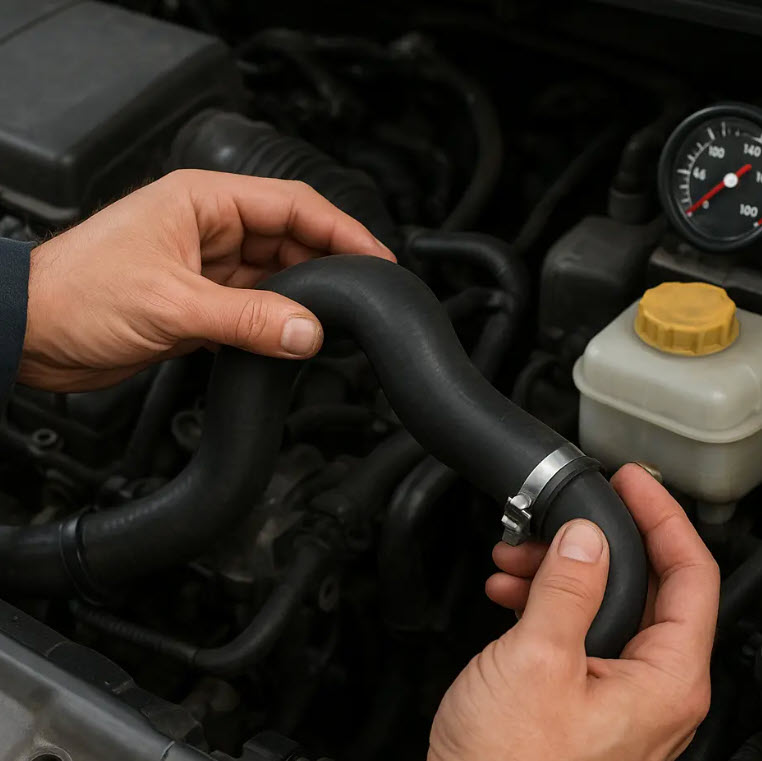
Inspect radiator hoses by squeezing them when cold. Soft spots, cracks, or brittleness mean replacement is overdue. Most mechanics recommend replacing hoses every 4 years regardless of appearance, as heat degrades rubber from the inside out. The upper radiator hose typically fails first due to direct engine heat exposure.
Pro tip: Replace your thermostat during any cooling system service. These $15-30 components prevent overheating but commonly stick closed without warning, and labor costs make replacement during other work economical.
Coolant Quality and Composition
Coolant degrades through oxidation and additive depletion. Test strips measure pH and freeze protection, but they miss additive package breakdown. A brown or rusty coolant color indicates corrosion products circulating through your system, scoring water pump seals and clogging heater cores.
Never mix coolant types. OAT (Organic Acid Technology) and IAT (Inorganic Additive Technology) formulas react chemically, creating gel deposits that block passages. Check your owner’s manual for the correct specification. Most vehicles built after 2000 require OAT coolant with 150,000 mile service intervals.
Brake System Evaluation for Highway Safety
Highway driving generates sustained heat in brake components. Descending mountain grades or heavy traffic requires repeated braking that standard commuting never approaches. Brake pads worn below 3mm thickness cannot dissipate heat effectively and experience exponential wear rates under these conditions.
Remove wheels for proper inspection. Measuring pad thickness through wheel spokes provides false confidence. Visual inspection reveals pad material composition, uneven wear patterns, and caliper piston condition. Organic pads wear faster but produce less dust, while ceramic materials last longer but cost more upfront.
“A common mistake is assuming brake pad replacement alone solves brake performance issues. In practice, rotors worn below minimum thickness specifications reduce pad contact area and create vibration that drivers interpret as warping. Always measure rotor thickness and lateral runout during pad replacement.” – Automotive Service Excellence Institute
Brake fluid absorbs moisture over time, reducing its boiling point from 400°F when new to below 300°F after two years. Moisture contamination causes vapor lock during heavy braking, creating a spongy pedal feel and extended stopping distances. Test fluid with moisture strips or replace it every 2 years as preventive maintenance.
Caliper and Hardware Inspection
Slide pins seize from corrosion and inadequate lubrication, causing uneven pad wear and pulling during braking. Remove, clean, and lubricate slide pins with high-temperature synthetic grease rated for brake applications. Standard lithium grease liquefies at brake operating temperatures.
Check brake hoses for bulging or cracking. Rubber brake lines expand under pressure when deteriorated, creating soft pedal feel and reduced braking force. Stainless steel braided hoses eliminate expansion but cost 3-4 times more than OEM rubber replacements.
Tire Assessment and Pressure Management
Tire failure at highway speeds causes more severe accidents than any other mechanical failure. Temperature affects tire pressure directly, with pressure increasing as ambient and road surface temperatures rise. A tire properly inflated at 65°F morning temperature will read 4-5 PSI higher during afternoon highway driving at 95°F.
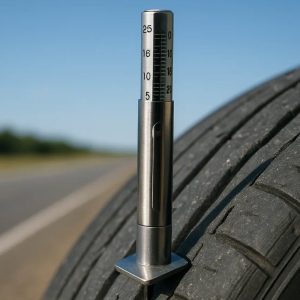
Tread depth below 4/32 inch significantly reduces wet traction. The penny test (inserting a penny with Lincoln’s head down into tread grooves) provides rough guidance, but digital depth gauges cost under $10 and deliver accurate measurements. Replace tires when any groove measures below 4/32 inch, not the legal minimum of 2/32 inch.
Pro tip: Rotate tires before long trips if you are within 1,000 miles of your scheduled rotation interval. Even wear across all four positions maximizes traction and prevents the weakest tire from determining replacement timing for the entire set.
Sidewall Inspection and Age Verification
Sidewall damage from curb impacts creates internal belt separation invisible from outside. Run your hand along inner and outer sidewalls feeling for bulges or irregularities. Any bulge indicates structural failure requiring immediate replacement.
Tire age matters more than tread depth for safety. The DOT date code stamped on sidewalls shows manufacturing week and year. Tires older than 6 years require replacement regardless of tread depth, as rubber compounds harden and lose grip. Many tire-related accidents involve tires with adequate tread but aged rubber.
Fluid Levels and Quality Checks
Every fluid system in your vehicle requires inspection during road trip preparation. Low fluid levels indicate leaks or consumption issues requiring diagnosis before departure. Quality degradation reduces protection and accelerates component wear.
Engine oil level and condition directly affect engine longevity. Check oil with the engine cold and vehicle level. Oil below the minimum mark on the dipstick indicates consumption or leakage. Dark black oil or gritty texture means oxidation and contamination. Change oil if you are within 1,000 miles of service interval before any trip over 500 miles.
Transmission and Differential Fluids
Automatic transmission fluid should appear bright red or amber depending on type. Brown or burnt-smelling fluid indicates overheating and clutch material breakdown. Most sealed transmissions have check procedures requiring specific temperature ranges for accurate level verification. Consult service information rather than guessing.
Differential fluid rarely gets attention but fails catastrophically when neglected. Gear oil breaks down from shear stress and heat, especially in limited-slip differentials using clutch packs. Replace differential fluid at manufacturer intervals, typically 30,000-50,000 miles depending on use severity.
Power Steering and Washer Fluid
Power steering systems using hydraulic assist require proper fluid level and quality. Low fluid creates noise and makes steering heavy. Some vehicles use specific power steering fluid formulations, while others specify automatic transmission fluid. Using incorrect fluid damages seals and causes leaks.
Fill washer fluid reservoirs completely before trips. Summer driving generates more windshield contamination from bugs and road debris. Use washer fluid containing bug remover compounds rather than plain water, which leaves residue and freezes in high-altitude mountain passes.
Battery and Electrical System Testing
Heat kills batteries faster than cold. Summer temperatures above 90°F accelerate internal corrosion and electrolyte evaporation. A battery showing 12.6 volts or higher when fully charged passes basic testing, but load testing reveals capacity under actual cranking conditions.
Load test batteries by applying a load equal to half the CCA (Cold Cranking Amps) rating for 15 seconds. Voltage should not drop below 9.6 volts during testing. Batteries failing load tests will start your vehicle successfully at home but fail after sitting in hot parking lots during travel.
Clean battery terminals and cable connections thoroughly. Corrosion creates resistance that reduces available cranking amperage. Apply dielectric grease after cleaning to prevent future corrosion. Many apparent battery failures actually result from poor connections rather than battery failure.
Alternator Output Verification
Alternators must produce 13.8-14.4 volts at idle with accessories running. Lower output indicates failing diodes or voltage regulator problems. Higher output overcharges the battery, boiling off electrolyte and damaging electrical components.
Test alternator output under load by running headlights, air conditioning, and other accessories while measuring voltage at the battery. Voltage dropping below 13.5 volts means the alternator cannot meet electrical demand. Replace alternators before they fail completely and leave you stranded.
Belt Condition and Tension
Serpentine belts drive alternators, water pumps, power steering pumps, and air conditioning compressors. A single belt failure disables multiple systems simultaneously. Inspect belts for cracks running across ribs, glazing, or missing chunks. Any damage requires immediate replacement.
Belt tension affects component life and performance. Loose belts slip under load, creating squealing and reducing alternator output. Overtightened belts stress bearings in driven components, causing premature failure. Most vehicles use spring-loaded tensioners maintaining proper tension automatically, but inspect tensioner condition and smooth operation.
Comparison: DIY vs Professional Inspection Approaches
| Approach | Advantages | Limitations |
|---|---|---|
| DIY Visual Inspection | No cost, immediate results, builds mechanical knowledge, can be done at home before any trip | Cannot detect internal component wear, lacks specialized testing equipment, misses hidden problems like bearing wear or internal leaks |
| Professional Multi-Point Inspection | Comprehensive testing with diagnostic equipment, identifies problems before failure, provides documentation, technicians catch issues DIY inspection misses | Costs $75-150, requires appointment scheduling, some shops push unnecessary services, results depend on technician skill level |
| Hybrid Approach (DIY + Targeted Professional) | Cost-effective, addresses specific concerns with professional equipment, maintains vehicle knowledge, focuses professional time on complex systems | Requires knowing when professional help is necessary, may miss connections between symptoms, timing coordination between DIY and shop visits |
The hybrid approach delivers the best results for experienced DIY mechanics. Perform visual inspections and basic testing at home, then schedule professional diagnosis for specific concerns identified during inspection. This targets professional labor costs while maintaining comprehensive vehicle inspection coverage.
Professional inspections make sense for complex systems requiring specialized tools. Brake fluid moisture testing, cooling system pressure testing, and battery load testing require equipment costing hundreds of dollars that most DIYers cannot justify. Many auto parts retailers offer free battery and alternator testing, providing professional-grade results without inspection costs.
Frequently Asked Questions
How far in advance should I inspect my vehicle before a summer road trip?
Complete inspections 1-2 weeks before departure. This timing allows ordering replacement parts without rush shipping costs and scheduling repair appointments at convenient times. Last-minute inspections force expensive overnight parts shipping or trip delays waiting for service appointments. Shops experience peak demand immediately before holiday weekends, making early inspection critical for timely service.
Can I skip cooling system inspection if my temperature gauge reads normal?
No. Temperature gauges show engine coolant temperature after it circulates through the system, but they do not detect weak hoses, low coolant levels, or failing water pumps until complete failure occurs. A cooling system operating at the edge of failure appears normal on gauges until sudden catastrophic overheating. Preventive inspection catches problems before gauges register issues.
What brake pad thickness requires immediate replacement before highway driving?
Replace brake pads measuring 3mm or less. Highway driving generates sustained heat through repeated braking, and thin pads cannot dissipate heat effectively. Pad wear accelerates exponentially below 3mm thickness. Waiting until you hear squealing means backing plates contact rotors, requiring rotor replacement in addition to pads and multiplying repair costs by 3-4 times.
Should I inflate tires to maximum PSI listed on sidewall for highway driving?
Never inflate to maximum sidewall PSI. Use the pressure specified on the door jamb sticker or owner’s manual, which accounts for vehicle weight and suspension design. Maximum sidewall PSI shows tire structural limits, not optimal operating pressure. Overinflation reduces contact patch, decreases traction, and creates harsh ride quality. Underinflation by even 5 PSI increases rolling resistance and heat buildup.
How do I know if my battery needs replacement or just charging?
Measure resting voltage after the battery sits unused for 2 hours. Readings above 12.4 volts indicate adequate charge, while below 12.2 volts means discharged or failing cells. Then perform load testing applying half the CCA rating for 15 seconds. Voltage dropping below 9.6 volts during load testing means internal damage requiring replacement. Batteries passing load tests but failing to hold charge have parasitic drain issues in vehicle electrical systems.
What fluids are most critical to check before long distance summer driving?
Coolant and engine oil take priority. Coolant prevents overheating in summer heat, while oil maintains lubrication under sustained highway speeds. Check levels and quality for both before any trip over 200 miles. Brake fluid ranks third, as moisture contamination reduces effectiveness during mountain driving or heavy traffic. Transmission fluid, power steering fluid, and differential oil require attention if near service intervals but rarely fail suddenly without warning signs.
Is professional alignment necessary before a road trip if my car drives straight?
Check alignment if tires show uneven wear patterns or the vehicle pulls to one side. Straight tracking does not guarantee proper alignment, as some wear patterns develop slowly over thousands of miles. Improper alignment increases tire wear rates, reduces fuel economy by 5-10%, and creates handling problems during emergency maneuvers. Professional alignment costs $75-125 but extends tire life by 10,000-15,000 miles, providing clear financial return.
What summer car maintenance steps have saved you from roadside breakdowns, and which inspections do you prioritize before long trips?